
CBT Worksheets, Handouts, And Skills-Development Audio: Therapy Resources for Mental Health Professionals

"Should" Statements

A Guide To Emotions (Psychology Tools For Living Well)

A Memory Of Caring For Others

A Memory Of Feeling Cared For

Abandonment
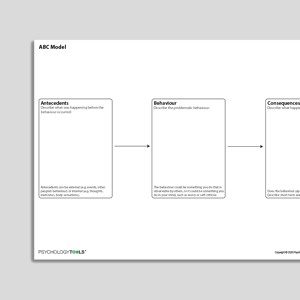
ABC Model

Activity Diary (Hourly Time Intervals)
Activity Diary (No Time Intervals)

Activity Menu
Activity Planning
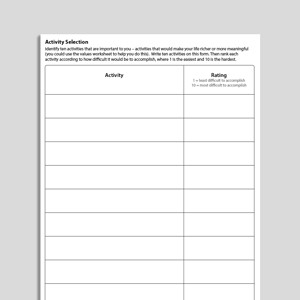
Activity Selection

All-Or-Nothing Thinking
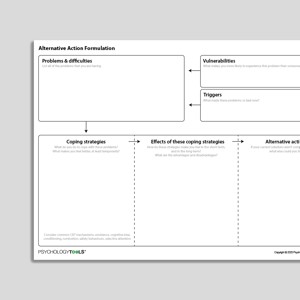
Alternative Action Formulation
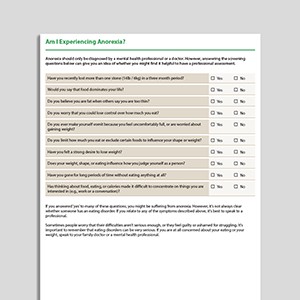
Am I Experiencing Anorexia?
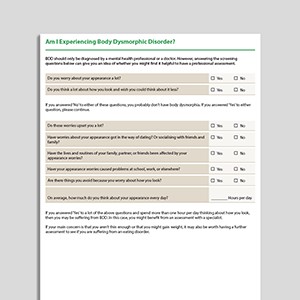
Am I Experiencing Body Dysmorphic Disorder (BDD)?
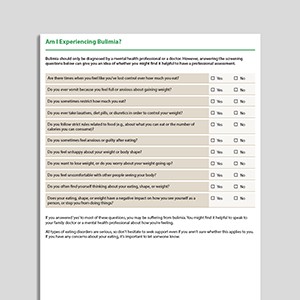
Am I Experiencing Bulimia?
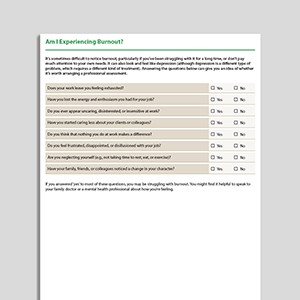
Am I Experiencing Burnout?
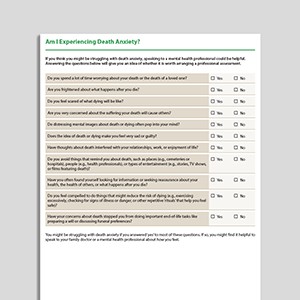
Am I Experiencing Death Anxiety?

Am I Experiencing Depersonalization And Derealization?
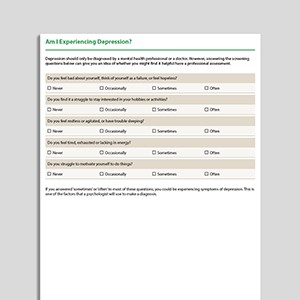
Am I Experiencing Depression?
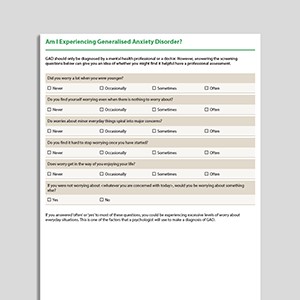
Am I Experiencing Generalized Anxiety Disorder (GAD)?
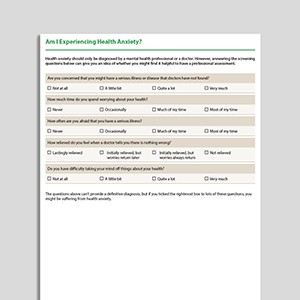
Am I Experiencing Health Anxiety?
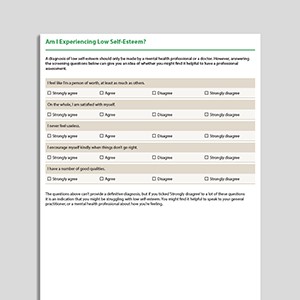
Am I Experiencing Low Self-Esteem?
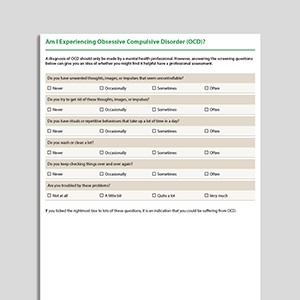
Am I Experiencing Obsessive Compulsive Disorder (OCD)?
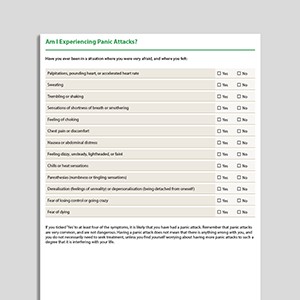
Am I Experiencing Panic Attacks?
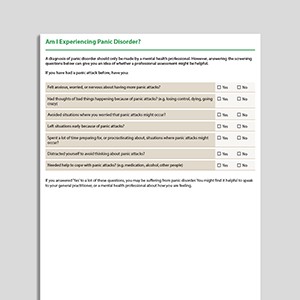
Am I Experiencing Panic Disorder?
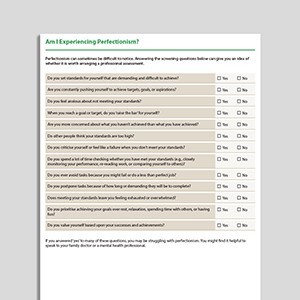
Am I Experiencing Perfectionism?

Am I Experiencing Post-Traumatic Stress Disorder (PTSD)?
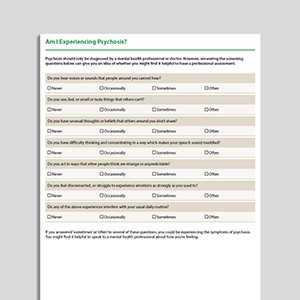
Am I Experiencing Psychosis?
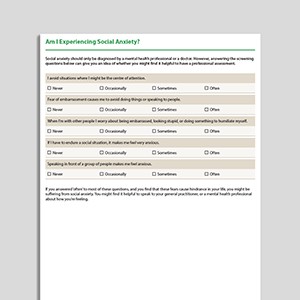
Am I Experiencing Social Anxiety?

An Introduction To CBT (Psychology Tools For Living Well)

Anger - Self-Monitoring Record

Anger Decision Sheet
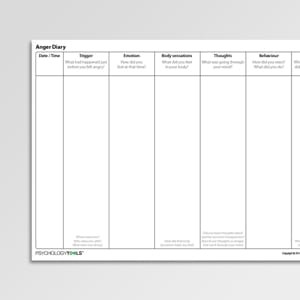
Anger Diary (Archived)

Anger Self-Monitoring Record (Archived)
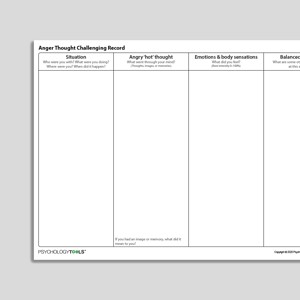
Anger Thought Challenging Record
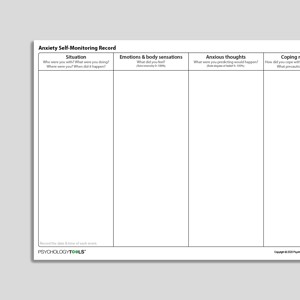
Anxiety - Self-Monitoring Record
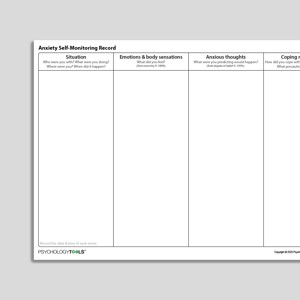
Anxiety Self-Monitoring Record (Archived)

Approach Instead Of Avoiding (Psychology Tools For Overcoming Panic)

Approval-/Admiration-Seeking

Arbitrary Inference

Assertive Communication

Assertive Responses

Attention - Self-Monitoring Record

Attention Training Experiment
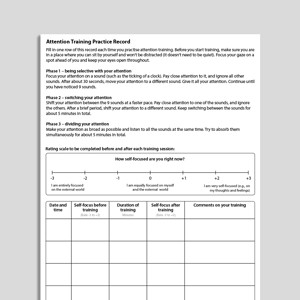
Attention Training Practice Record

Audio Collection: Psychology Tools For Developing Self-Compassion

Audio Collection: Psychology Tools For Mindfulness

Audio Collection: Psychology Tools For Overcoming PTSD

Audio Collection: Psychology Tools For Relaxation

Autonomic Nervous System
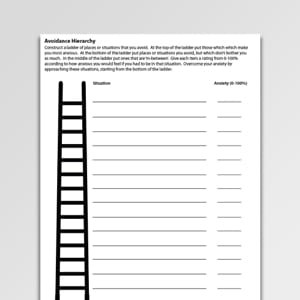
Avoidance Hierarchy (Archived)

Balance

Barriers Abusers Overcome In Order To Abuse
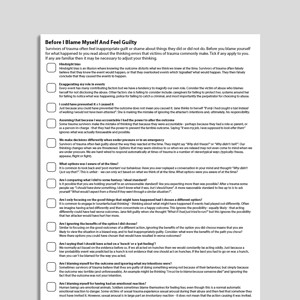
Before I Blame Myself And Feel Guilty

Behavioral Activation Activity Diary

Behavioral Activation Activity Planning Diary
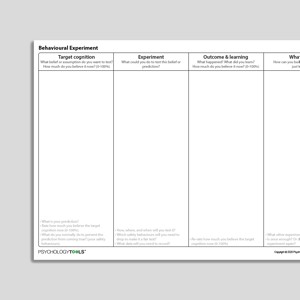
Behavioral Experiment

Behavioral Experiment (Portrait Format)

Behaviors In Panic (Psychology Tools For Overcoming Panic)

Being A Compassionate Person

Being With Difficulty (Audio)

Belief Driven Formulation

Belief-O-Meter (CYP)

Body Posture

Body Scan (Audio)

Body Sensations In Panic (Psychology Tools For Overcoming Panic)

Boundaries - Self-Monitoring Record

Breathing To Activate Your Soothing System

Breathing To Calm The Body Sensations Of Panic (Psychology Tools For Overcoming Panic)

Broadening Your Perspective

Catastrophizing

Catching Your Thoughts (CYP)
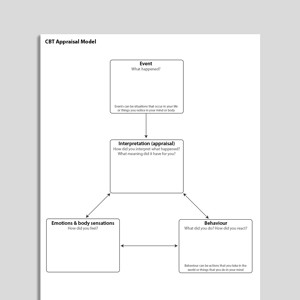
CBT Appraisal Model
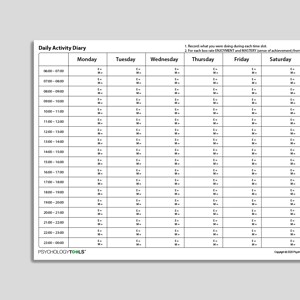
CBT Daily Activity Diary With Enjoyment And Mastery Ratings

CBT Thought Record Portrait

CFT Calm Place

Challenging Your Negative Thinking (Archived)

Changing Avoidance (Behavioral Activation)

Checking Certainty And Doubt

Checklist For Better Sleep

Classical Conditioning

Coercive Methods For Enforcing Compliance
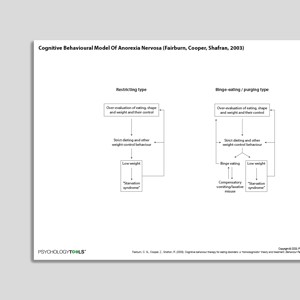
Cognitive Behavioral Model Of Anorexia Nervosa (Fairburn, Cooper, Shafran, 2003)
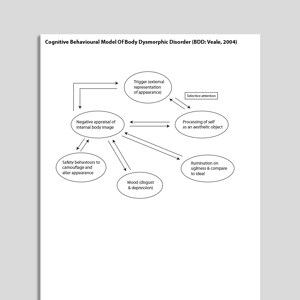
Cognitive Behavioral Model Of Body Dysmorphic Disorder (BDD: Veale, 2004)
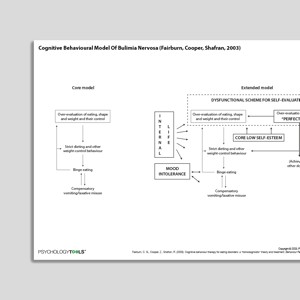
Cognitive Behavioral Model Of Bulimia Nervosa (Fairburn, Cooper, Shafran, 2003)

Cognitive Behavioral Model Of Clinical Perfectionism (Shafran, Cooper, Fairburn, 2002)
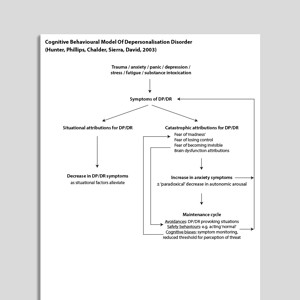
Cognitive Behavioral Model Of Depersonalization (Hunter, Phillips, Chalder, Sierra, David, 2003)
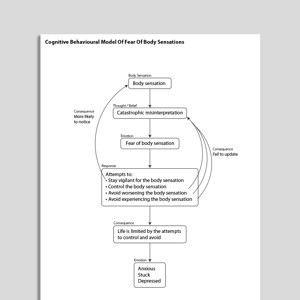
Cognitive Behavioral Model Of Fear Of Body Sensations

Cognitive Behavioral Model Of Generalized Anxiety Disorder (GAD: Dugas, Gagnon, Ladouceur, Freeston, 1998)

Cognitive Behavioral Model Of Health Anxiety (Salkovskis, Warwick, Deale, 2003)
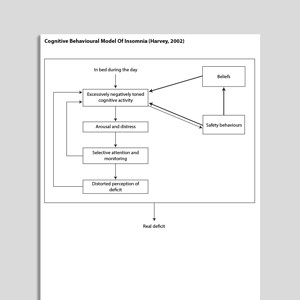
Cognitive Behavioral Model Of Insomnia (Harvey, 2002)

Cognitive Behavioral Model Of Intolerance Of Uncertainty And Generalized Anxiety Disorder Symptoms (Hebert, Dugas, 2019)
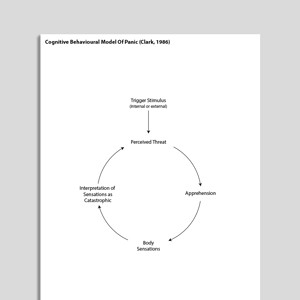
Cognitive Behavioral Model Of Panic (Clark, 1986)

Cognitive Behavioral Model Of Persistent Postural-Perceptual Dizziness (PPPD: Whalley, Cane, 2017)
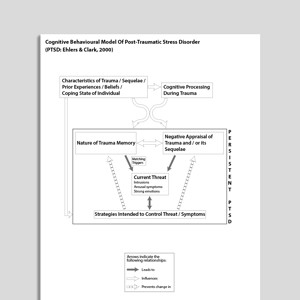
Cognitive Behavioral Model Of Post Traumatic Stress Disorder (PTSD: Ehlers & Clark, 2000)

Cognitive Behavioral Model Of Social Phobia (Clark, Wells, 1995)
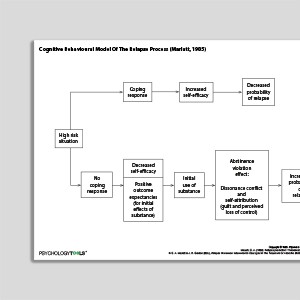
Cognitive Behavioral Model Of The Relapse Process (Marlatt & Gordon, 1985)

Cognitive Behavioral Model Of Tinnitus (McKenna, Handscombe, Hoare, Hall, 2014)

Cognitive Behavioral Treatment Of Childhood OCD: It's Only A False Alarm: Therapist Guide
What is Psychology Tools?
Psychology Tools develops and publishes evidence-based psychotherapy resources and tools for mental health professionals. Our online library gives you access to everything you need to deliver more effective therapy and support your practice. With a wide range of topics and resource types covered, you can feel confident knowing you’ll always have a range of accessible and effective materials to support your clients, whatever challenges they are facing, whatever stage you are at, and however you work.
Choose from assessment and case formulations to psychoeducation, interventions and skills development, CBT worksheets, exercises, and much more. Our resources include detailed therapist guidance, references and instructions, so they are equally suitable for those with less experience but who want to expand their practice. Each resource explains how to work with the material most effectively, and how to use it with clients.
Are these resources suitable for you?
Psychology Tools is used by thousands of professionals all over the world as a key part of their practice and preparation, and our resources are designed to be used with clients who experience psychological difficulties or distress. Professionals who use our resources include:
- Clinical, Counseling, and Practitioner Psychologists
- Coaches
- Counselors
- Family Doctors / General Practitioners
- Licensed Clinical Social Workers
- Mental Health Nurses
- Psychiatrists
- Psychological Wellbeing Practitioners
- Psychotherapists
- Therapists (CBT Therapists, ACT Therapists, DBT Therapists)
Psychology Tools resources are perfect for individuals, teams and students, whatever their preferred modality, or career stage.
What kinds of resources are available at Psychology Tools?
Psychology Tools offers a range of relatable, engaging, and evidence-based resources to ensure that your clients get the most out of therapy or counseling. Each resource has been carefully designed with accessibility in mind and is informed by best practice guidelines and the latest scientific research.
Exercises
Therapeutic exercises are used in many evidence-based psychotherapies including cognitive behavioral therapy, rational emotive behavior therapy, compassion-focused therapy, schema therapy, emotion-focused therapy, systemic family-based therapies, and several others.
Therapists and counselors benefit from incorporating exercises into their work. They can be used to:
- Introduce and explain key concepts.
- Collect information about clients’ difficulties.
- Bring therapeutic ideas to life.
- Keep therapy active and engaging.
- Alleviate distress and/or reduce problematic symptoms.
- Practice new skills and coping strategies.
- Develop new insights and self-awareness.
- Give clients a sense of accomplishment and progress.
Psychology Tools offers a variety of exercises that you can use with your clients as a part of therapy or counseling. These interventions can be incorporated into your sessions, assigned as homework tasks, or used stand-alone interventions. Many of our exercises are either evidence-based (meaning they have been shown to effectively treat certain difficulties) or evidence-derived (meaning they form part of a treatment program that has been shown to effectively treat certain difficulties).
The exercises available at Psychology Tools have a variety of applications. You can use them to:
- Develop case conceptualizations, formulations, and treatment plans.
- Address specific difficulties, such as worry, insomnia, and self-focused attention.
- Introduce clients to new skills, such as grounding, problem-solving, relaxation, and assertiveness.
- Support key interventions, such as exposure and response prevention, safety planning with high-risk clients, and perspective-taking.
- Plan treatments and prepare for supervision.
Psychology Tools exercises have been developed with practicality and convenience in mind. Most exercises include simple step-by-step instructions so that clients can use them independently or with the support of their therapist or counselor. In addition, therapist guidance is available for each exercise, which includes a detailed description of the task, relevant background information, an overview of its aims and potential uses in therapy, and simple instructions for its delivery. A comprehensive list of references is also provided so that you can access key studies and further your understanding of each exercise’s applications in psychotherapy.
Information handouts
Did you know that 40 – 80% of medical information is immediately forgotten by patients (Kessels, 2003)? The same is probably true of therapy and counseling, so clients will almost always benefit from having access to additional written information.
Psychology Tools information handouts provide clear, concise, and reliable information, which will empower your clients to take an active role in their treatment. Learning about their mental health, helpful strategies and techniques, and other psychoeducation topics helps clients better understand and overcome their difficulties. Moreover, clients who understand the process and content of therapy are more likely to invest in the process and commit to making positive changes.
Psychology Tools information handouts can help your clients:
- Understand their difficulties and what keeps them going.
- Learn what therapy is and how it works.
- Understand what they are doing in therapy and why.
- Remember and build upon what has been discussed during sessions.
- Create a personalized collection of resources that can used between appointments.
Our illustrated information handouts cover a wide variety topics. Each has been informed by scientific evidence, best practice guidelines, and expert opinion, ensuring they are both credible and consistent with evidence-based therapies. Topics featured among these resources include:
- ‘What is…’ handouts. These one-page resources provide a concise summary of common mental health problems (e.g., anxiety, depression, low self-esteem), key therapeutic approaches (such as cognitive behavioral therapy, eye movement desensitisation and reprocessing, and compassion-focused therapy), and psychological mechanisms which maintain the problem (such as worry and rumination).
- ‘What keeps it going…’ handouts. These handouts explain the key mechanisms that maintain difficulties such as burnout, panic disorder, PTSD, and perfectionism. You can use them to inform your case conceptualization or as a roadmap in therapy.
- ‘Recognizing…’ handouts. These guides can help you identify and assess specific disorders, comparing key diagnostic criteria taken from leading diagnostic manuals.
- Simple explanations of key psychological concepts, such as safety behaviors, psychological flexibility, thought suppression, and unhelpful thinking styles.
- Overviews of important psychological theories, such as operant conditioning and exposure.
Each information handout comes with guidance written specifically for therapists and counselors. It provides suggestions for introducing psychoeducation topics, facilitating helpful discussions related to the handout, and ensuring the content is relevant to your clients.
Worksheets
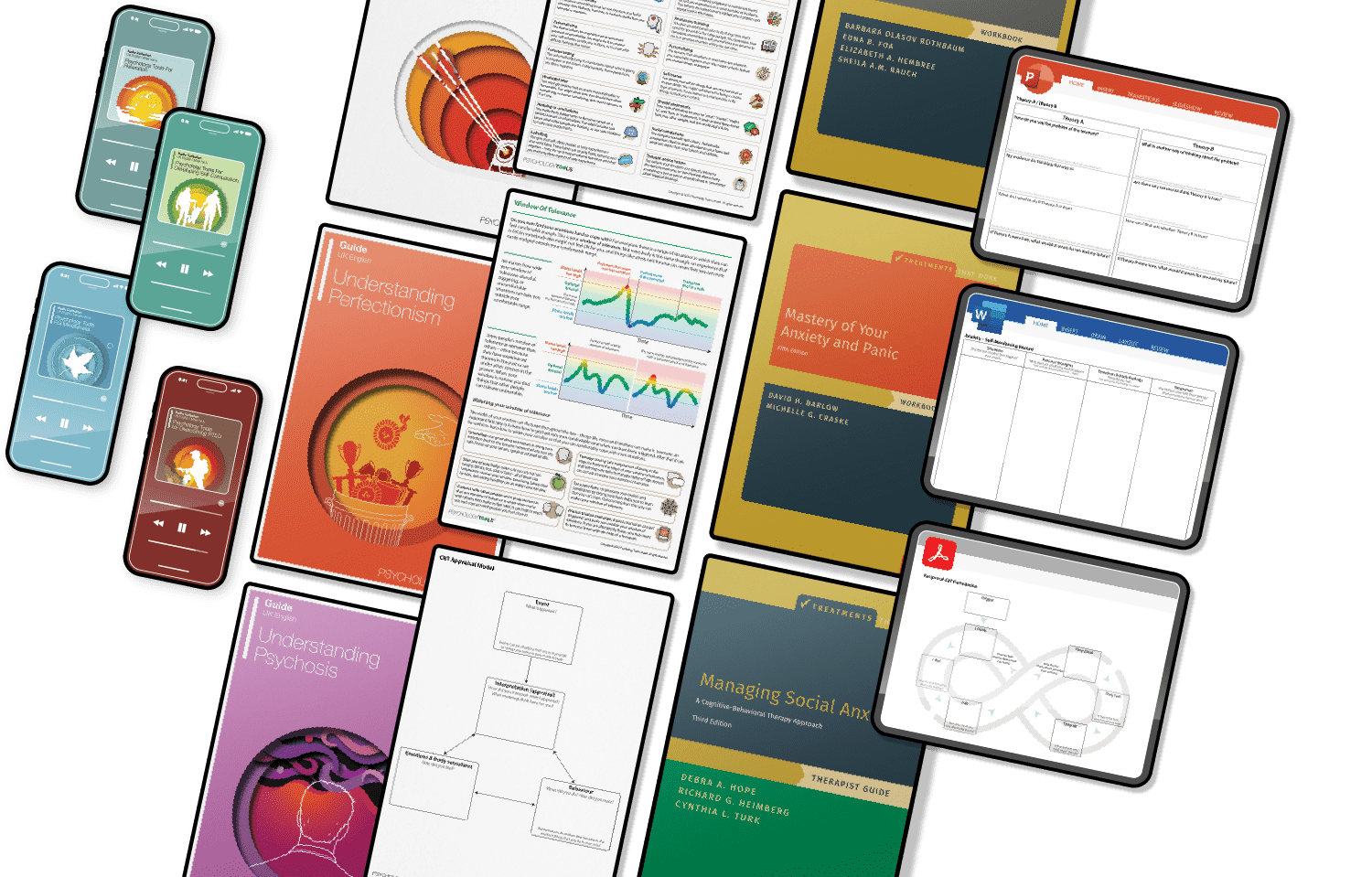
Worksheets are a core ingredient of many evidence-based therapies such as CBT. Our worksheets take many forms (e.g., diaries, diagrams, activity planners, records, and questionnaires) and can be used throughout the course of therapy.
How you incorporate worksheets into therapy or counselling depends on each client’s difficulties, goals, and stage of recovery. You can use them to:
- Assess and monitor clients’ difficulties.
- Inform treatment plans and guide decision-making.
- Teach clients new skills such as ‘self-monitoring’ or ‘thought challenging’.
- Ensure that clients apply their learning in the real world.
- Track their progress over time.
- Help clients to take an active role in their recovery.
Clients also benefit from using worksheets. These tools can help them:
- Become more aware of their difficulties.
- Identify when, how, and why these problems occur.
- Practice using new skills and techniques.
- Express and explore difficult feelings.
- Process difficult events.
- Consolidate and integrate insights from therapy.
- Support their self-reflection.
- Feel empowered and build self-efficacy.
Psychology Tools offers a wide variety of worksheets. They include general forms that are widely applicable, disorder-specific worksheets, and logs that are used in specific therapies such as CBT, schema therapy, and compassion-focused therapy. These resources are typically available in editable or fillable formats, so that they can be tailored to your client’s needs and used in a flexible manner.
Guides & self-help
People want clear guidance on mental health, whether for themselves or a loved one.
Our ‘Understanding…’ series is designed to introduce common mental health difficulties such as depression, PTSD, or social anxiety. Each of these guide uses a clear and accessible structure so that readers can understand them without any prior therapy knowledge. Topics addressed in each guide include:
- What the problem is.
- How it arises.
- Where it might come from.
- What keeps it going.
- How the problem can be treated.
Other guides address important topics such as trauma and dissociation, or the effects of perfectionism. They usually contain a mixture of psychoeducation, practical exercises and skills development. They promote knowledge, optimism, and positive action related to these difficulties, and have been informed by current research and evidence-based treatments, ensuring they are consistent with best practices.
Therapists can use Psychology Tools guides in several ways:
- As a screening tool. Clients can read the guide to see if the difficulty or topic is relevant to them.
- As psychoeducation. Each guide provides essential information related to the difficulty or topic so that client can develop a better understanding of it.
- As self-help. Each guide describes key skills and techniques that can be used to overcome the difficulty.
Each guide contains informative illustrations, practical examples, and simple instructions so that clients can easily relate to the content and apply it to their difficulties.
Therapy audio
Audio exercises are a particularly convenient and engaging way help your clients and can add variety to your therapeutic toolkit. Psychology Tools audio resources can help your clients:
- Augment and consolidate their learning in therapy.
- Practice new techniques.
- Integrate skills and practices into their daily lives.
- Access additional support when they need it.
- Create a sense a continuity between your meetings.
A variety of audio resources are available at Psychology Tools. Each one has been developed and recorded by highly experienced clinical psychologists and can be easily integrated into your therapeutic practice. Audio collections include:
- Psychology Tools for Developing Self-Compassion
- Psychology Tools for Relaxation
- Psychology Tools for Mindfulness
- Psychology Tools for Overcoming PTSD
Many of these audio resources are widely applicable (e.g., mindfulness-based tools), although problem-specific resources are also available (e.g., tools for overcoming PTSD). You can use these tools:
- During your therapy sessions.
- As a homework task for clients to complete.
- As a stand-alone intervention or ongoing part of therapy.
Treatments That Work®
Authored by leading psychologists including David Barlow, Michelle Craske, and Edna Foa, Treatments That Work® is a series of workbooks based on the principles of cognitive behavioral therapy (CBT). Each pair of books in the series – therapist guide and workbook – contains step by step procedures for delivering evidence-based psychological interventions. Clinical illustrations and worksheets are provided throughout.
You can use these workbooks:
- To plan treatment for a range of specific difficulties including depression, obsessive compulsive disorder (OCD), social anxiety, and substance use.
- As a self-help intervention that you guide the client through during sessions.
- As a supplement to therapy, which clients work through independently.
- To consolidate the content of your sessions.
- As an ongoing intervention at the end of treatment (e.g., for difficulties that haven’t been fully addressed).
Each book is available to download chapter-by-chapter, and Psychology Tools members with a currently active subscription to our ‘Complete’ plan are licensed to share copies with their clients.
Archived resources
We work hard to keep all resources up to date, so we regularly review and update our library. However, we understand that you might get used to a certain version of a resource as part of your workflow. Instead of removing older versions, we keep them in our archive so that you can still access them if you want to. We also clearly explain if an improved version is available, so you can choose which you prefer.
Series and ranges
As well as many topic-specific resources, we also publish a variety of ranges and series.
- The ‘What is…’ series. These one-page resources cover a range of common mental health problems. In client friendly language they provide a concise summary of the problem, what it can feel like, what maintains it and an overview of key evidence-based therapeutic approaches (e.g., CBT, EMDR, and compassion-focused therapy) to treatment.
- The ‘What keeps it going…’ series. These are one-page diagrams that explain what tends to maintain common mental health conditions such as burnout, panic disorder, PTSD, and perfectionism. You can use them to inform your case conceptualization or as a roadmap in therapy. They provide a quick and easy way for clients to understand why their disorder persists and how it might be interrupted.
- The ‘Recognizing…’ series can help you identify and assess specific disorders, comparing key diagnostic criteria from leading diagnostic manuals.
- The ‘Understanding…’ series is a collection of psychoeducation guides for common mental health conditions. Friendly and explanatory, they are comprehensive sources of information for your clients. Concepts are explained in an easily digestible way with plenty of case examples and diagrams. Each guide covers symptoms, treatments and some key maintenance factors.
- The ‘Guide to…’ resources give clients a deep dive into a condition or treatment approach. They cover a mixture of information, psychoeducation, practical exercises and skills development to help clients learn to manage their condition. Each of these guides offers psychoeducation about the topic alongside a range of practical exercises with clear instructions to help clients identify, monitor, and address their symptoms.
- The ‘Self-monitoring’ collection provides problem-specific records designed to help you and your clients get the most from this essential but often overlooked technique. Covering a broad range of conditions, these worksheets allow you to give clients a tool that is targeted to their experience, with relevant language and prompts.
- The ‘Formulation’ series provides a client-friendly adaptation of cognitive behavioral models for disorders including panic, PTSD, and social anxiety. These useful tools can help you and your clients come to a shared understanding of their difficulties, and can help you to develop a roadmap for therapy.
Multilingual library of translations
Did you know that Psychology Tools has the largest online, searchable library of multilingual therapy resources? We aim to make our resources accessible to everyone. With over 3500 resources across 70 languages, you can give clients resources in their native language, enabling a deeper understanding and engagement with the treatment process. Translations are carried out by specially selected professional translators with experience of psychology, and our pool of volunteer mental health professionals. We also make sure that the resource design is the same for each translated resource so that you can be confident you know what section you are looking at, even if you don’t speak the language.
Simply find the resource you want to use, then explore which languages that resource is available in, or you can see all the resources available in a particular language by using our search filters.
What formats are the resources available in, and how can I use them?
People work in different ways. Our formats are designed to reflect that, so you can choose the style that suits how you and your client want to work. Psychology Tools resources are perfectly formatted to work whether you practice face to face, remotely, or use a blended approach.
- Professional version. Designed for clinicians, this comprehensive option includes everything you need to use the resource confidently. As well as the resource, each PDF contains useful information, including therapist guidance explaining how to use the resource most effectively, descriptions that provide theoretical context, instructions, therapist prompts, and references. Some resources also include case examples and annotations where appropriate.
- Client version. This is a blank PDF of the resource, with client-friendly instructions where appropriate, but without the theoretical description. These are ideal for printing and using in-session, or giving to a client.
- Fillable PDFs are great for clients who want to work with resources online instead of on paper. Your client can fill in and save the resource on a computer, before sending it back to you without the need for a printer. This format is also useful if you have remote sessions with clients and want to work through a resource on screen together.
- Editable PowerPoint documents are useful if you want to make any changes to the resource structure, or personalize it for your client.
- Editable Word documents are also useful if you want to make changes to the resource, and are more suited to printing.
How do we design our resources to support your practice?
Our resources are informed by evidence-based treatments, best practice guidelines, and the latest published research. They are written by highly experienced therapists and experts in mental health, ensuring they are effective and as up to date as possible. In addition, every resource goes through a rigorous peer review process to confirm they are accurate and easy to use.
Each resource is designed with both clients’ and therapists’ needs in mind. For clients, that means using clear, user-friendly language, as well as plenty of visual and case examples, illustrations, diagrams and vignettes that readers can relate to. They include information on how the resource can help them, how they should use it, and other useful tips.
We also include useful information and descriptions for clinicians to help them use the resource most effectively. The therapist versions of each resource contain therapist guidance, prompts, instructions, and full references. They outline how the resource can be used and what types of problems it could be helpful for.
- Designed to make strong theory-practice links. We pay close attention to the theory underpinning our resources, which provides therapists with useful context and helps them make theory-practice links. Having a greater understanding of each tool ensures best practice.
- One concept per page. Wherever possible, we create resources using the principle of one therapeutic concept per page, as this ensures that we have distilled the idea down to its essence. This makes each tool simple for therapists to communicate and easy for clients to grasp. We also pay close attention to visual layout and design, to make our resources as accessible as possible. Every resource aims to maximize clinical benefit and engagement, without overwhelming readers.
- Action focused. Resources are designed to be interactive, collaborative and goal-focused, with prompts to facilitate self-monitoring of progress and goals.
How can I use this page?
This page is where you can explore all the resources in the Psychology Tools library. The different search filters on the left-hand side enable you to customize your search, depending on what you need. Materials are organized by resource type, problem, and therapy tool, though you can also filter by language or use the search box. You can find more detailed instructions for how to find resources here.
Can I share resources directly with my clients?
If you have a paid Psychology Tools membership, you are licensed to share resources with clients in the course of your professional work. You can even email resources (even large audio collections) directly to your clients from our website. All emails are secure and encrypted, so it is a quick and easy way to save you time and facilitate clients’ self-practice.
What if I need more help?
We have a wide range of ‘How-to’ guides and an FAQ in our help centre, which answers questions on how to use the library and tools, such as ‘How do I download resources?’ or ‘How do I email resources to my clients directly from the website?’.
References
Kessels, R. P. C. (2003). Patients’ memory for medical information. Journal of the Royal Society of Medicine, 96, 219-222.